
What Is Wagashi? Taste, Ingredients & How to Enjoy It

Honoka Tsuchida
founder of WA Japan Gift
Wagashi are traditional Japanese sweets, made mainly from plant-based ingredients like rice, sweet red beans, sugar and agar, and designed to reflect the seasons.
They’re usually served with green tea, and they’re as much about how they look and feel as how they taste.
I put together seasonal wagashi boxes for people around the world, so I eat a lot of these sweets. For this guide, I opened some of the sweets from our Autumn 2026 box and tasted them one by one, to show you what wagashi really is, and what it actually tastes like.
What is wagashi?
The word wagashi comes from two parts: wa (和), meaning “Japanese” or “harmony,” and kashi (菓子), meaning “sweets.” It’s used to describe Japanese confectionery, as opposed to Western-style sweets like cake or chocolate.
A few things make wagashi different from most desserts:
- They follow the seasons. Shapes, colors and ingredients change throughout the year: cherry blossoms in spring, cool jellies in summer, maple leaves and chestnuts in autumn.
- They’re gently sweet. Wagashi are made to pair with the slight bitterness of green tea, so the sweetness is softer and more rounded than many Western desserts.
- They’re made to be looked at. Many wagashi are small works of art, shaped by hand to suggest a flower, a leaf, or a scene from nature.
- Every region has its own. Travel to a different prefecture in Japan, and you’ll almost always find a local sweet you’ve never tried.
What does wagashi taste like?
Most wagashi taste mild, gently sweet and earthy, with flavors like sweet red bean, roasted soybean, chestnut, matcha and brown sugar. But the biggest surprise for many people is the texture, which ranges from chewy and soft to smooth, jelly-like, or crisp.
Here’s what I tasted from our autumn box. These three sweets all come from Sasaya Iori,
a long-established wagashi maker in Kyoto, and they show how different wagashi can be, even from a single shop.
Kinako mochi (roasted soybean rice cake)
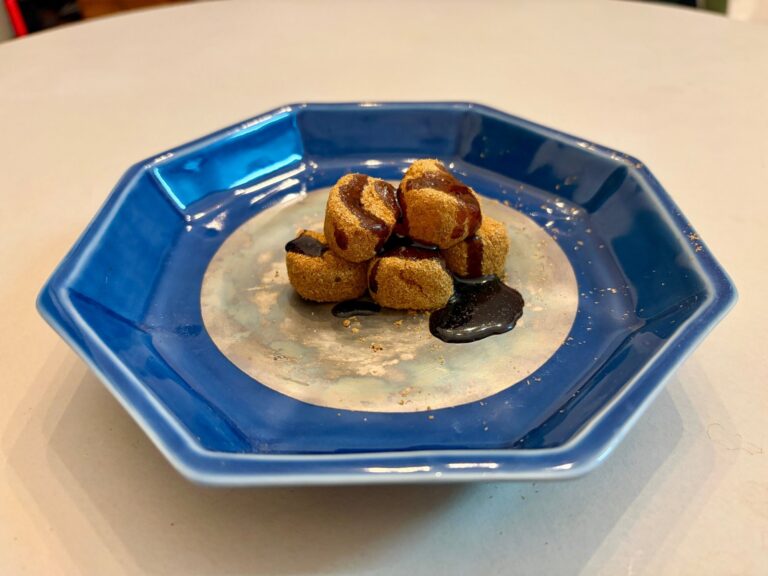
Soft, chewy mochi coated in kinako, a roasted soybean flour with a nutty, toasty flavor. It comes with a small pack of kuromitsu, a dark brown sugar syrup, to pour over the top.
The mochi is wonderfully chewy, and the simple, earthy flavor of the kinako pairs perfectly with the deep, caramel-like sweetness of the kuromitsu. It’s a classic combination,
and one I’d recommend to anyone trying wagashi for the first time.
Momiji manju (maple leaf cake)
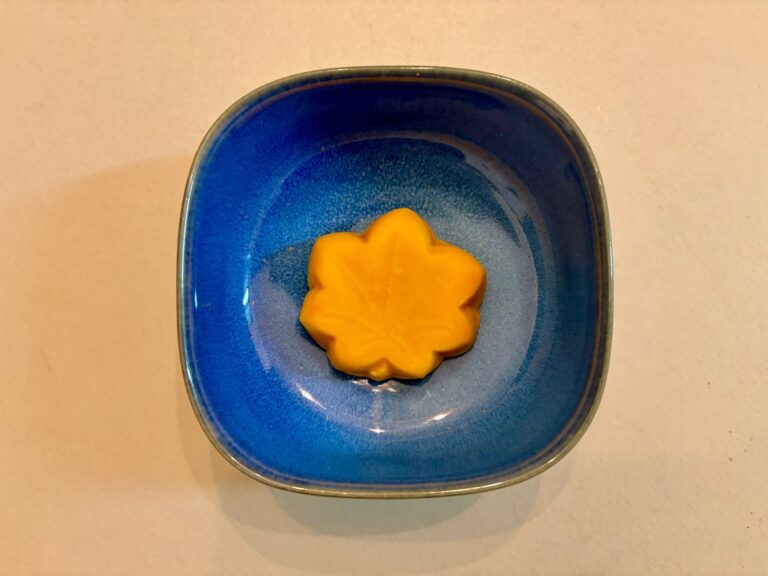
This little cake is shaped like an autumn maple leaf, momiji, one of the most loved symbols of fall in Japan. Inside the soft, moist cake is a filling of shiro-an, a smooth white bean paste.
The texture reminded me of a soft baumkuchen: moist and tender, not dry at all. The sweetness is gentle and refined, the kind of sweet that lets you finish it and want another.
Matcha senbei (matcha wafer sandwich)
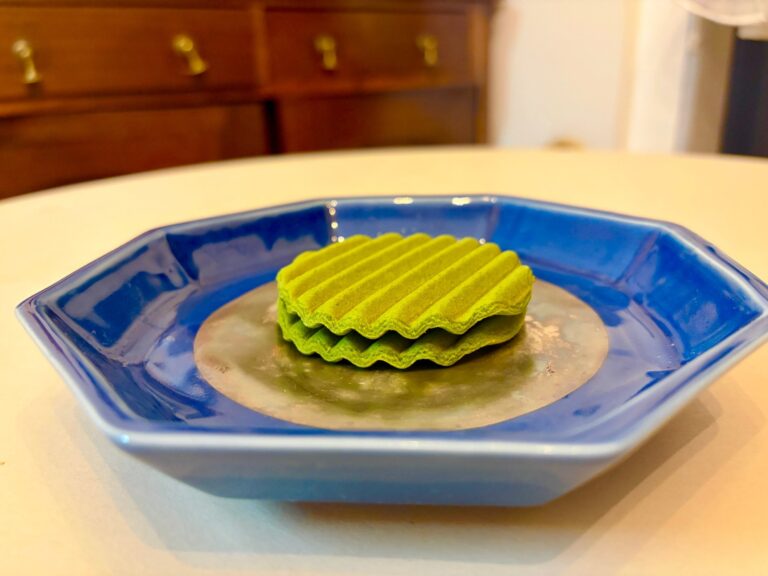
Two thin, wavy matcha wafers sandwiched together with a matcha cream filling. Senbei usually means a crisp cracker or wafer, and this one is light and delicate.
Matcha brings a gentle bitterness that balances the sweetness of the cream, which is why it’s one of the most popular flavors in Japanese sweets.
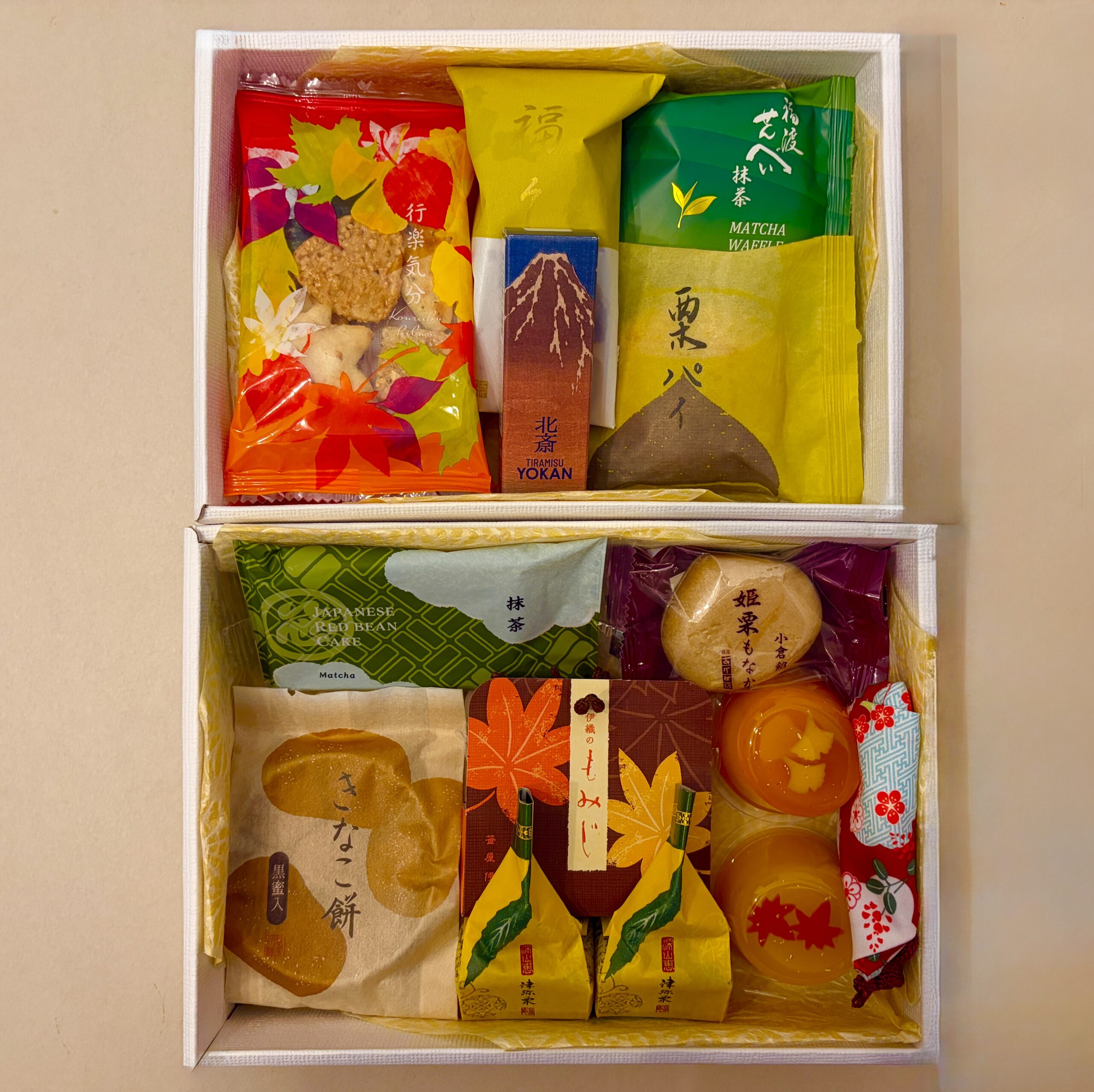
Taste seasonal wagashi from Japan
The sweets above came from our Autumn 2026 box. Each season, I hand-select 10+ Japanese sweets from confectioners across Japan and ship them in a box wrapped in washi paper. Our Winter box arrives in January, in time for the Japanese New Year.
See the seasonal box →Photo: our Autumn 2026 box. Contents change every season.
What is wagashi made of?
Traditional wagashi rely on a small number of simple ingredients:
| Ingredient | What it is |
|---|---|
| Anko | Sweet red bean paste, the heart of many wagashi |
| Mochigome / rice flour | Glutinous rice, used for mochi and dango |
| Kanten (agar) | A seaweed-based gelling agent, used for jellies like yokan |
| Kinako | Roasted soybean flour with a nutty flavor |
| Matcha | Powdered green tea |
| Sugar | Often fine white sugar or dark brown sugar (kokuto) |
Many traditional wagashi are naturally free of dairy and eggs. However, some modern wagashi and baked sweets use wheat flour, eggs or butter, so always check the label if you have allergies.
Note: Our WA Japan Gift boxes may contain wheat, egg and dairy, and are not vegan or gluten-free.
Popular types of wagashi
| Type | What it is |
|---|---|
| Mochi & daifuku | Chewy rice cakes, often filled with red bean paste. Read our guide to mochi → |
| Nerikiri | Soft sweets shaped by hand into seasonal flowers and leaves |
| Yokan | A firm jelly made from red bean paste and agar |
| Dango | Small rice dumplings on a skewer |
| Warabi mochi | A jiggly, jelly-like sweet served with kinako and kuromitsu |
| Monaka | Crisp rice wafers filled with sweet bean paste |
How to eat wagashi
In Japan, wagashi is almost always enjoyed with tea. On a visit to Saryo Housen, a tea house in Kyoto, I had matcha with a seasonal sweet and warabi mochi with dark sugar syrup, looking out at a quiet garden. That combination is the simplest way to understand wagashi.
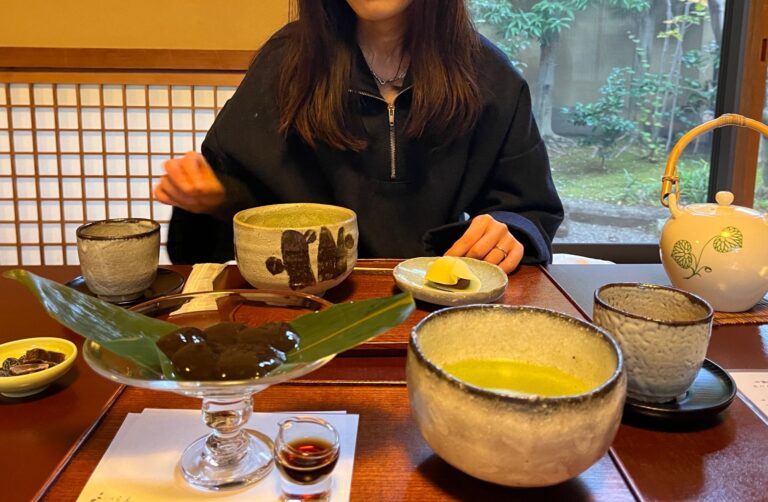
A few tips:
- Eat the sweet first, then sip the tea. The sweetness softens the bitterness of matcha, and the tea refreshes your palate.
- Use a small wooden pick. Wagashi are often served with a kuromoji, a wooden pick for cutting the sweet into small bites.
- Enjoy it soon. Many fresh wagashi are best within a few days. Store them in a cool, dark place.
- Take a moment to look. Notice the shape and color before you eat. It’s part of the experience.
Wagashi and the four seasons
Wagashi changes with the year, which is what makes it special:
- Spring: cherry blossom sweets like sakura mochi
- Summer: cool, clear jellies and warabi mochi
- Autumn: chestnut, sweet potato and maple-leaf sweets
- Winter: sweets for the New Year, often in red and white for good luck
This is exactly why WA Japan Gift ships only four times a year. Each season, I select sweets that truly belong to that time of year, so you can taste Japan’s seasons wherever you are.
→ See this season’s box Order by December 15 to receive the Winter box in January, in time for the Japanese New Year.
FAQ
What is wagashi in simple terms? Wagashi are traditional Japanese sweets, usually made from rice, red bean paste, sugar and agar, and designed to reflect the seasons.
What does wagashi taste like? Most wagashi taste mildly sweet and earthy, with flavors like red bean, roasted soybean, chestnut and matcha. The texture can be chewy, smooth, jelly-like or crisp.
What is the difference between wagashi and mochi? Mochi is one type of wagashi. Wagashi is the broader word for all traditional Japanese sweets, including mochi, yokan, dango and nerikiri.
Is wagashi healthy? Many traditional wagashi are made with plant-based ingredients and contain little or no fat, but they do contain sugar. They’re best enjoyed in small portions with tea.
How long does wagashi last? Fresh wagashi like mochi are best within a few days. Baked or dried wagashi can last longer. Always check the best-before date.
About the author: Honoka Tsuchida is the founder of WA Japan Gift. She curates seasonal wagashi from across Japan and shares Japanese food and gift culture with people around the world. Read our story →