
What Is Mochi? Taste, Ingredients & How It’s Eaten in Japan

Honoka Tsuchida
founder of WA Japan Gift
Mochi is a soft, chewy Japanese rice cake made from glutinous rice that is steamed
and pounded into a smooth, stretchy dough. It can be eaten plain, grilled, in soup,
or wrapped around sweet fillings like red bean paste and fresh strawberries.
In the US, many people first meet mochi as mochi ice cream.
In Japan, though, mochi is much older and much bigger than that.
It is part of New Year celebrations, neighborhood festivals and the tea ceremony.
In this guide, I’ll explain what mochi is, how it tastes, and how we actually eat it in Japan.
I’ll also share a few memories from growing up with it.
What is mochi made of?
Traditional mochi has just one ingredient: mochigome, a short-grain glutinous rice.
The word “glutinous” sounds like gluten, but it isn’t. It describes the rice’s sticky texture. Mochigome is very high in a starch called amylopectin, which is what makes mochi so stretchy and elastic.
There are two common ways to make it:
- Pounded mochi (tsukimochi): whole grains of mochigome are soaked, steamed, then pounded until smooth. This is the traditional method.
- Mochi from rice flour: many modern sweets use shiratamako or mochiko, which are flours made from glutinous rice. You mix the flour with water and steam or boil it. This is how most homemade and store-bought mochi sweets are made today.
Sweet mochi often adds sugar, and is dusted with potato or corn starch so it doesn’t stick to your fingers.
What does mochi taste like?
Mochi tastes mild, lightly sweet, and a little like cooked rice, but its texture is what makes it special: soft, smooth, and very chewy, with a gentle stretch when you bite into it. Because plain mochi has such a subtle flavor, most of its taste comes from what it’s paired with, such as sweet red bean paste, roasted soybean flour, or soy sauce.
Japanese people often describe this texture as mochi-mochi, a word we now use for any food with that bouncy, chewy feel.
Japanese people often describe this texture as mochi-mochi, a word we now use for any food with that bouncy, chewy feel.
- Sweet red bean paste (anko)
- Kinako (roasted soybean flour)
- Kuromitsu (dark brown sugar syrup)
- Soy sauce and nori seaweed, for a savory version
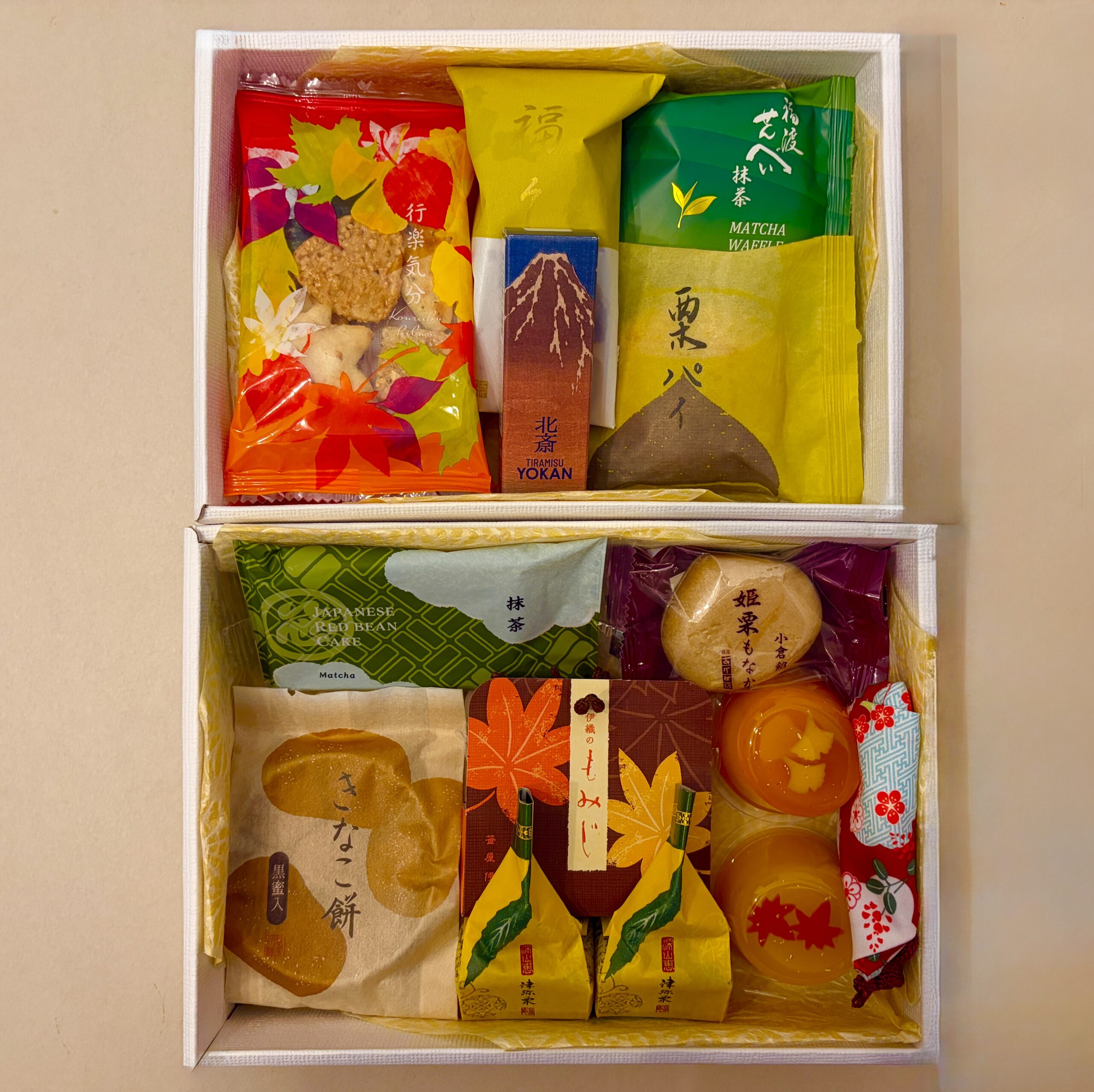
Want to taste real mochi from Japan?
Each season, I hand-select 10+ Japanese sweets from small confectioners across Japan. Our Winter box arrives in January, in time for the Japanese New Year.
See the seasonal box →Photo: our Autumn 2026 box. Contents change every season.
Where is mochi from? Is mochi Japanese?
Rice cakes are eaten across East Asia, and similar foods exist in China, Korea and elsewhere. Mochi, as a word and as a tradition, is Japanese. It has been part of Japanese life for over a thousand years.
For centuries, mochi was a special-occasion food. It was offered to the gods,
eaten at New Year and shared at celebrations.
One example still found in many homes today is kagami mochi,
two stacked round mochi with a bitter orange on top, placed in the home at New Year.
How mochi is made: my memory of mochitsuki
When I was little, our neighborhood held a mochitsuki taikai, a community mochi-pounding event.
Steamed rice goes into a large stone or wooden mortar called an usu.
One person swings a heavy wooden mallet called a kine.
Between each strike, a second person quickly turns and wets the dough by hand.
The rhythm matters, because if you’re slow, you could get hit by the mallet!
I remember taking my turn with the mallet. It was much heavier than I expected.
Then everyone ate the warm, fresh mochi right there with kinako or anko.
Freshly pounded mochi is softer than anything you can buy in a shop.
It’s one of my favorite childhood memories.
In winter we also had dondo-yaki, a New Year fire festival where New Year decorations are burned. People roast small mochi or dango over the fire, and it’s said that eating them keeps you healthy for the year ahead.
How mochi is eaten in Japan
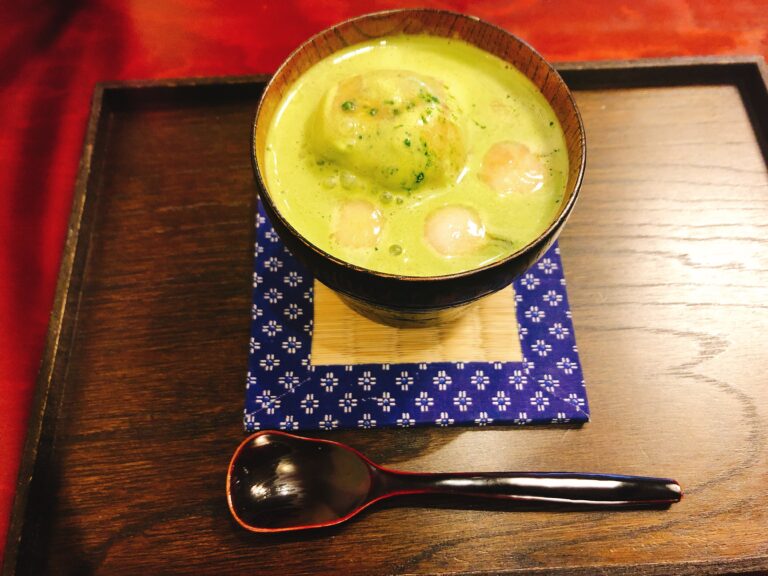
Mochi shows up in more ways than most people outside Japan realize:
- Grilled (yaki-mochi): dried mochi blocks are toasted until they puff up and turn crispy outside and gooey inside. They’re often eaten with soy sauce and nori.
- In soup (ozoni): a New Year soup with mochi. The broth and shape of the mochi differ from region to region.
- In sweet soup (zenzai / oshiruko): warm red bean soup with mochi or shiratama dumplings, especially popular in winter.
- As shiratama: small, smooth dumplings made from shiratamako. They’re added to parfaits, anmitsu, and even matcha drinks.
Popular types of mochi sweets
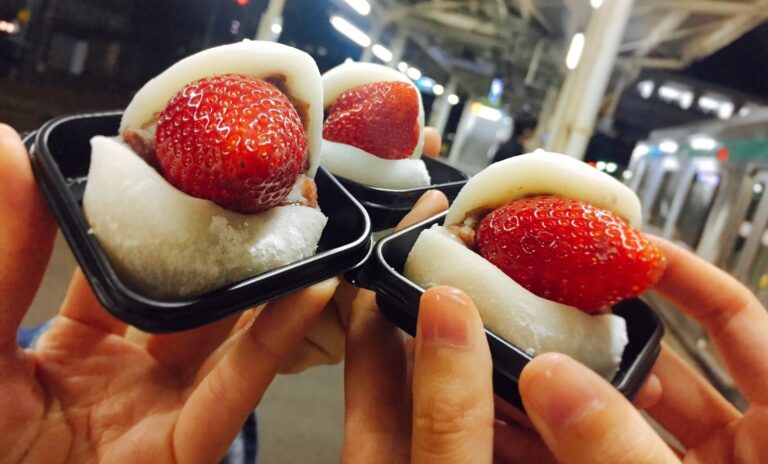
| Name | What it is |
|---|---|
| Daifuku | Soft mochi wrapped around sweet red bean paste |
| Ichigo daifuku | Daifuku with a whole fresh strawberry inside, a winter and spring favorite |
| Sakura mochi | Pink mochi with red bean paste, wrapped in a salted cherry leaf. A spring sweet |
| Kashiwa mochi | Mochi wrapped in an oak leaf, eaten on Children's Day (May 5) |
| Dango | Small mochi balls on a skewer, often with sweet soy glaze (mitarashi) |
| Kusa mochi | Green mochi made with mugwort, with a fresh herbal aroma |
Many regions also have their own local mochi sweets.
One example is shingen mochi from Yamanashi Prefecture, eaten with kinako and kuromitsu. This is one of the things I love about Japan: travel to a new prefecture, and you’ll almost always find a mochi sweet you’ve never tried.
Not all "mochi" is made from rice
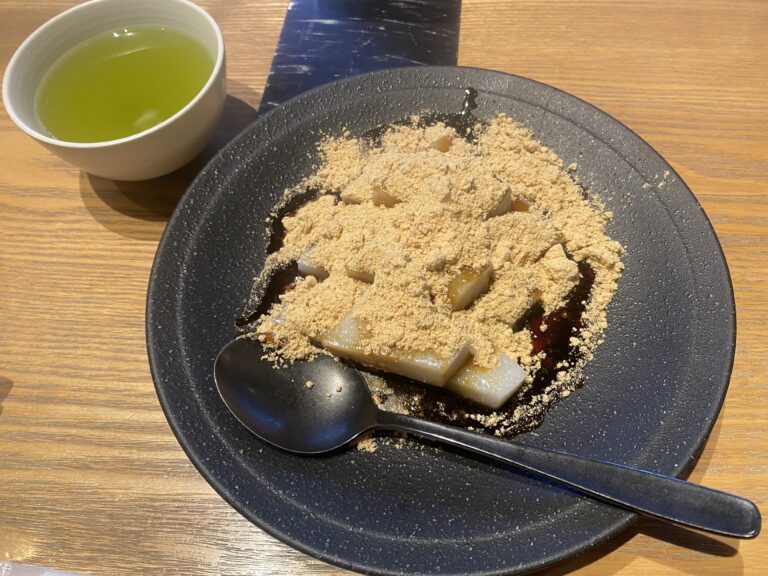
Here’s something that confuses even some Japanese people. Warabi mochi is called mochi,
but it isn’t made from rice at all. It’s traditionally made from bracken starch, which gives it a jiggly, almost jelly-like texture that melts in your mouth. It’s usually served chilled with kinako and kuromitsu, and it’s a perfect summer sweet.
In Kyoto, I once tried making yatsuhashi, the city’s famous sweet.
Fresh (nama) yatsuhashi is a soft, chewy dough made from rice flour with cinnamon,
folded around red bean paste. It feels very close to mochi, but has its own distinct,
fragrant character. Making it by hand gave me a new respect for the craftsmen who shape these sweets every day.
Mochi ice cream vs. traditional mochi
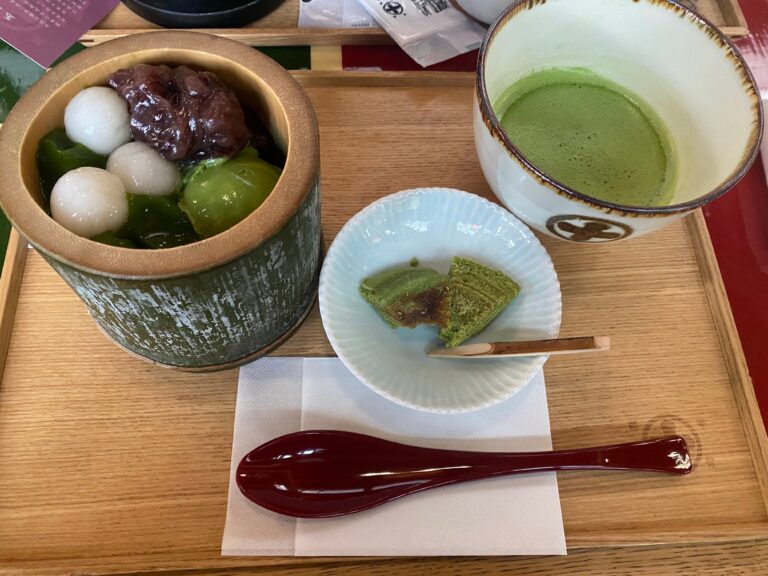
Mochi ice cream, a ball of ice cream wrapped in a thin layer of mochi, is a modern creation that became especially popular in the US.
It’s delicious, but it’s quite different from what most Japanese people picture when they hear “mochi.”
Traditional mochi sweets are served at room temperature or warm.
They’re usually filled with bean paste rather than ice cream, and they’re meant to be eaten fresh, often with a cup of green tea. In Japanese cafés, you’ll often see mochi and ice cream served side by side, like the shiratama and matcha ice cream in the photo above, rather than one wrapped inside the other.
Is mochi gluten-free?
Plain mochi made only from glutinous rice is naturally gluten-free, because rice does not contain gluten.
However, many mochi sweets and other wagashi are not. Some include wheat flour, are made alongside wheat products, or use soy sauce, which usually contains wheat. If you avoid gluten, always check the ingredients label of each product.
Note: Our WA Japan Gift boxes are not gluten-free. They may contain wheat, egg and dairy.
Tips for eating mochi
- Take small bites and chew well. Mochi is very sticky. Every New Year in Japan there are reminders to eat it carefully, especially for young children and older adults.
- Eat it fresh. Fresh mochi hardens within a day or two. Store mochi sweets in a cool, dark place and enjoy them soon.
- Pair it with green tea. The slight bitterness of matcha or sencha balances the sweetness perfectly.
Mochi and the seasons: a taste of Japan's tea culture
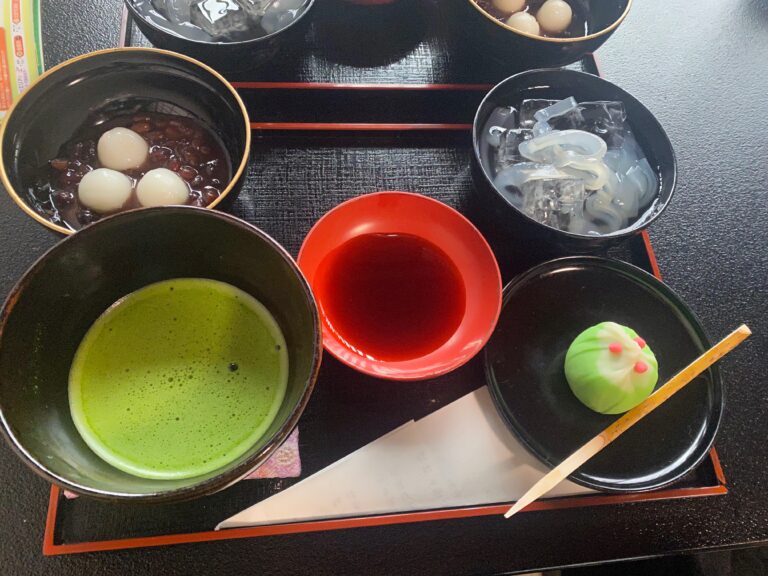
When you drink matcha at a temple in Japan, it is usually served with a small seasonal sweet (kashi). The sweet changes with the time of year.
In spring it might be shaped like cherry blossoms, in autumn like maple leaves. Sitting quietly, tasting the sweet first and then the matcha, is one of the simplest ways to feel the season in Japan.
That feeling is the idea behind WA Japan Gift.
Each season, we choose 5–10 sweets from across Japan’s 47 prefectures.
We wrap them in traditional washi paper and ship them to your door, so you or someone you love can taste the season, wherever you are.
→ See this season’s box Order by December 15 to receive our Winter box in January, just in time for the Japanese New Year season.
FAQ
What is mochi in simple terms? Mochi is a chewy Japanese rice cake made by pounding steamed glutinous rice into a smooth dough.
What is mochi made of? Traditional mochi is made from glutinous rice (mochigome). Many modern sweets use glutinous rice flour such as shiratamako or mochiko, plus sugar and fillings.
What does mochi taste like? It has a mild, slightly sweet rice flavor and a soft, very chewy texture. Most of its flavor comes from fillings and toppings like red bean paste or kinako.
Is mochi gluten-free? Plain rice mochi is naturally gluten-free, but many mochi sweets contain wheat or soy sauce. Always check the label.
Is mochi ice cream the same as mochi? No. Mochi ice cream is a modern dessert with ice cream wrapped in mochi. Traditional mochi sweets are usually filled with sweet bean paste and served at room temperature.
Is mochi sweet? Plain mochi is only very lightly sweet. On its own, it’s often eaten in savory ways, such as grilled with soy sauce or added to soup. Mochi sweets like daifuku, sakura mochi, and dango are sweet because they’re filled or topped with red bean paste, sugar, or syrup.
What is the texture of mochi like? Fresh mochi is soft, smooth, sticky, and very chewy, with a stretchy, bouncy feel that Japanese people call “mochi-mochi.” It firms up as it sits, which is why mochi is best enjoyed fresh. Mochi ice cream feels softer and colder, since a thin layer of mochi is wrapped around ice cream.
Is mochi sticky?Yes. Fresh mochi is soft and sticky because it’s made from glutinous rice, which is high in a sticky starch called amylopectin. Mochi sweets are usually dusted with potato or corn starch, or coated in roasted soybean flour (kinako), so they don’t stick to your fingers. Because mochi is so sticky, it’s best to take small bites and chew well.
Does mochi taste good? Most people love mochi, but it’s often the texture, more than the flavor, that wins them over. Plain mochi tastes mild and lightly sweet, so the best way to enjoy it for the first time is with a classic filling or topping, such as daifuku with sweet red bean paste, or mochi with kinako and dark sugar syrup. Fresh mochi from a Japanese confectioner tastes noticeably softer and better than frozen or mass-produced versions.
About the author: Honoka Tsuchida is the founder of WA Japan Gift. She grew up pounding mochi at neighborhood festivals and now curates seasonal wagashi from all 47 prefectures of Japan for people around the world. Read our story →